
 By Heather Benac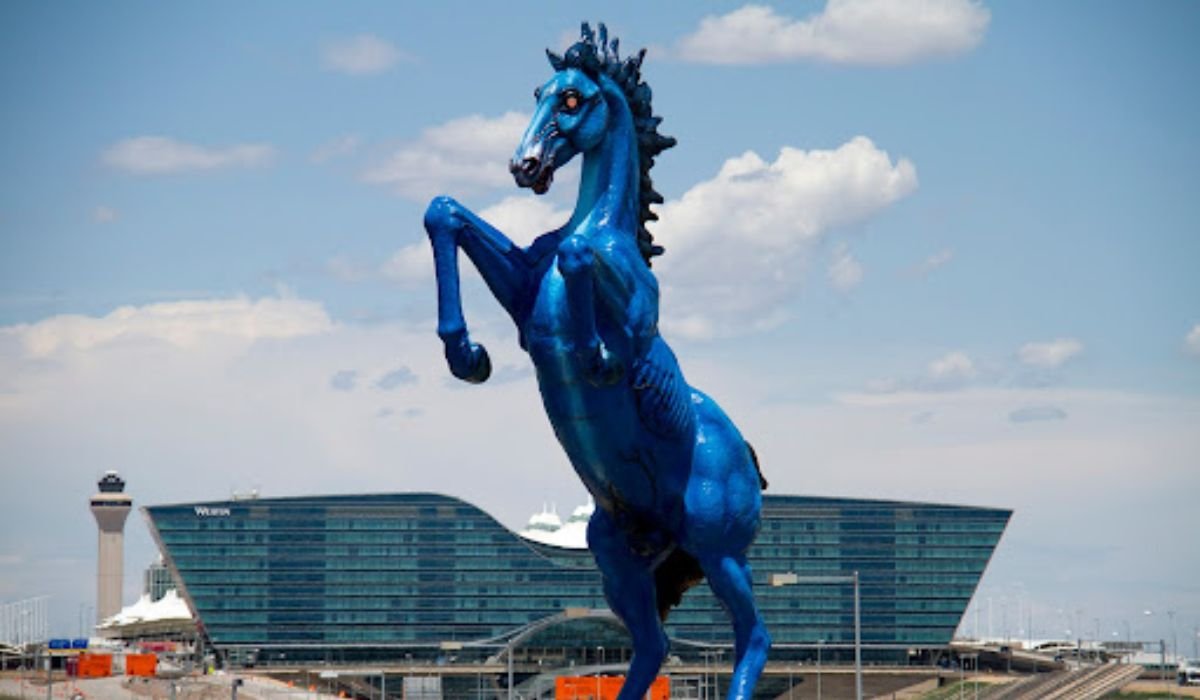
Brief History of DIA
Denver International Airport opened in 1995 after starting construction in 1989, replacing the outdated Stapleton Airport. It ran 16 months late and $2 billion over budget due to design changes, strikes, and issues like a failed automated baggage system. These setbacks, plus its remote location and massive 53-square-mile size, sparked early whispers of hidden agendas.
Popular Theories and Realities
Theories often link to the New World Order, Freemasons, or Illuminati, citing elements like a dedication capstone mentioning a “New World Airport Commission.” In truth, this was a short-lived group for opening events, named after a symphony. Artwork, including gargoyles and murals, adds to the strangeness, but artists intended messages of protection and harmony. The airport now playfully nods to the lore with exhibits, turning myths into attractions.
Why It Matters for Travelers
For curious visitors, DIA offers a mix of fact and fun: explore the art, but know the “creepy” vibes come from creative choices, not conspiracies. It’s a gateway to Colorado’s weird history, perfect for those into dark tourism.
Imagine stepping off your flight, the crisp Colorado air hitting you as you spot a towering blue horse with glowing red eyes staring down like it’s guarding secrets. What if this isn’t just an airport, but a portal to hidden worlds? Your dive into Denver airport conspiracy theories begins here, where fact and fiction blur in one of America’s strangest travel hubs.
Why Denver Airport Fuels Endless Theories
Picture this: a massive airport plunked in the middle of nowhere, built way over budget with art that looks straight out of a dystopian novel. That’s Denver International Airport (DIA), opened in 1995 after years of drama. Construction kicked off in 1989 to replace the cramped Stapleton Airport, which couldn’t handle growing traffic or bad weather without chaos. But delays piled up, from design tweaks to worker strikes, pushing costs $2 billion over and the timeline 16 months late.
Folks started whispering early. Why build so far out, on 53 square miles of prairie? Rumors flew: maybe it’s covering ancient Native American sites, or hiding something bigger. Archaeology checks found it was just a hunting ground, no burials. Still, the isolation and setbacks made perfect fodder for tales of secret societies pulling strings.
Add in the art program, mandated to spend 1% of big builds on public pieces, and you’ve got fuel for the fire. Think of it like a giant canvas where artists layered bold statements, but viewers saw codes. The airport’s tent-like roof evokes Indigenous tepees or snowy peaks, yet some claim it signals elite hideouts.
Mythbuster Moment: No, it’s not on cursed land. The site was chosen to dodge noise complaints from nearby counties. But that remoteness? It lets theories thrive, turning a practical choice into dark tourism gold.
Mapping the Mysteries: Key Conspiracy Spots
Ready to navigate DIA like a legend hunter? Start at the entrance with Blucifer, the 32-foot blue mustang sculpture by Luis Jiménez.
Its red eyes glow like embers, a nod to Jiménez’s dad’s neon shop and a scary horse encounter from his youth. Tragedy struck when part of it fell, killing the artist in 2006; his kids finished it. Conspiracy fans call it a Four Horsemen steed or cursed guardian. Reality: It’s wild West spirit, blue like a Blue Roan breed.
Head inside to the Jeppesen Terminal for Leo Tanguma’s murals, like “Children of the World Dream of Peace” and “In Peace and Harmony with Nature.”
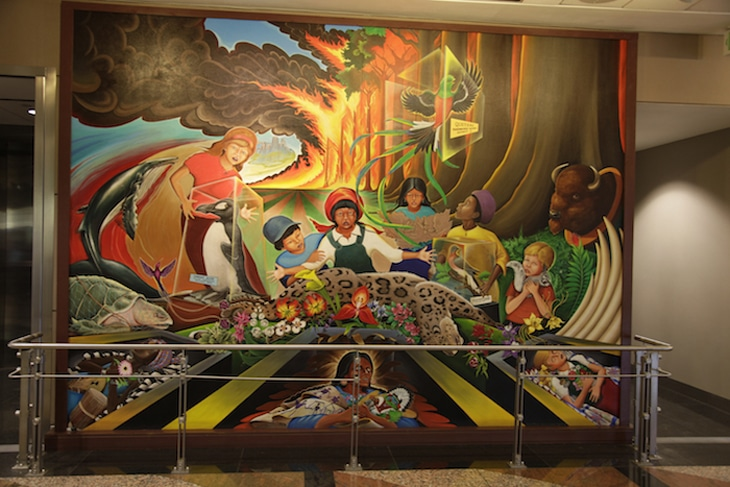
These show war horrors (a faceless soldier stabbing a dove, bombed ruins) and environmental woes (dead animals, burning forests), then flip to hope: kids from 70+ countries beating swords into plowshares, embracing unity. Tanguma, inspired by his work with youth, aimed for spiritual messages of peace and justice. “I need to see what’s wrong in society, and then reflect it,” he said. But theorists see New World Order prophecies, even linking to 9/11 or fascism. Removed in 2018 for remodels, they’re stored until 2027.
Don’t miss the runways: from above, their pinwheel layout might mimic a swastika if you squint hard.
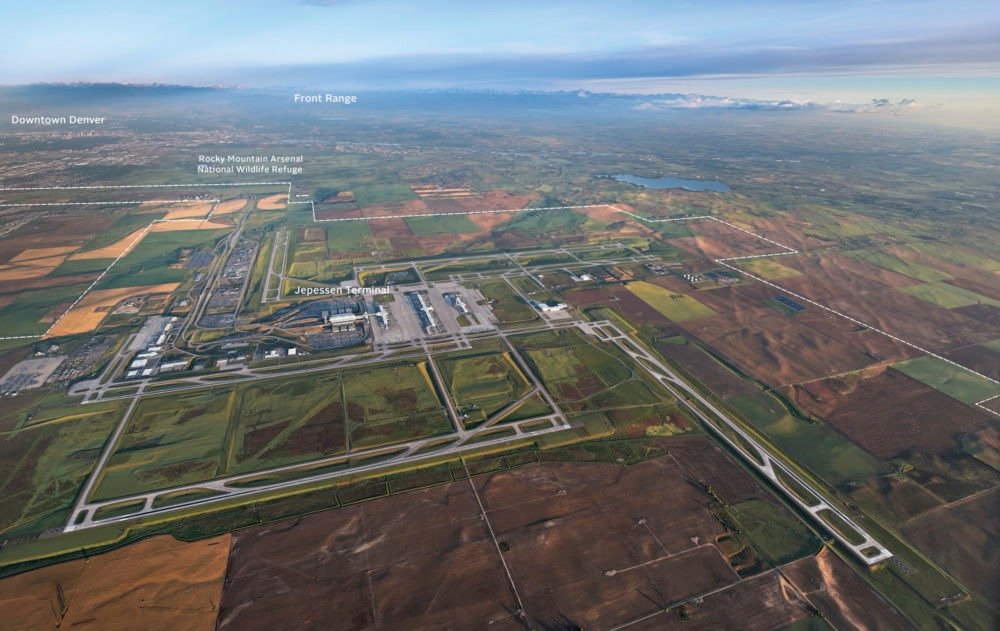
Claimed as a Nazi tribute or control symbol. Truth: It allows multiple planes to take off at once, no matter the wind. Our brains love patterns, but this one’s functional.
Baggage claim hosts “Notre Denver” gargoyles, grinning from suitcases.
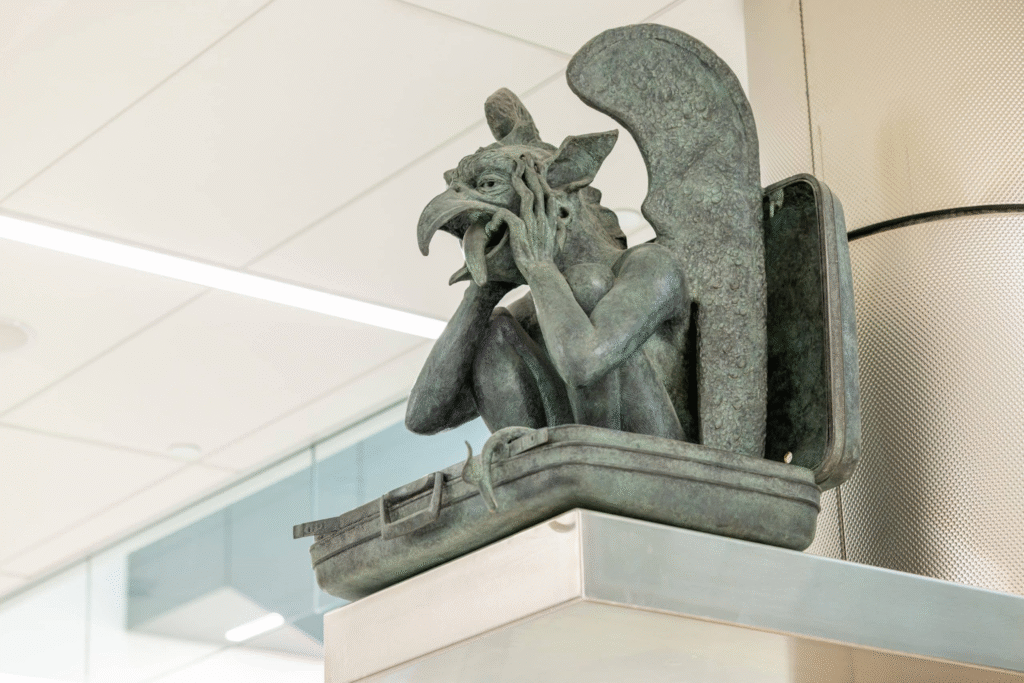
Inspired by Notre Dame, they “protect” luggage with demonic flair. Some say they’re evil harbingers; artist Terry Allen meant fun protection.
The dedication capstone bears Masonic symbols and “New World Airport Commission.”
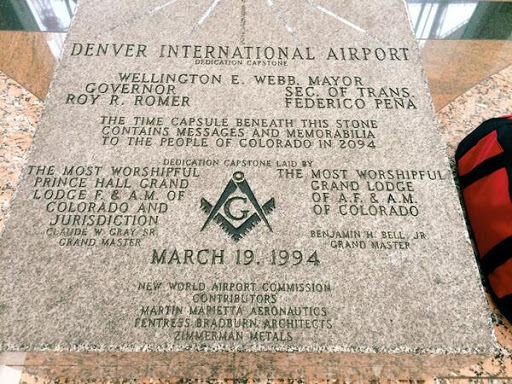
Theorists link it to Illuminati or New World Order. Actually, local Masons laid it as stonemasons; the commission was temp for festivities, nodding to Dvořák’s symphony. Time capsule inside? Sneakers, casino tokens, memorabilia.
Underground, tunnels for trains and old baggage routes spark bunker tales: elite apocalypse shelters, lizard people lairs, or NORAD links. The failed baggage system (scrapped after glitches) added mystery. No deep cities; just offices and maintenance.
Other spots: A mining cart tile with “Au Ag” (gold, silver for mining history, not a virus). Floor words? Navajo names.
READ ALSO: Navigating Paradise: Your Essential Guide to Arriving at Cancun International Airport
Practical Table: Conspiracy vs. Reality
| Conspiracy Claim | Key Element | Fact Check | Source Tip |
| Blucifer Curse | Glowing red eyes, artist’s death | Tribute to neon heritage; accident, not curse | See Jiménez bio at flydenver.com |
| Apocalyptic Murals | War, destruction scenes | Hope for peace, inspired by youth work | Tanguma interviews on coloradosun.com |
| Swastika Runways | Aerial layout | Efficient pinwheel for operations | Aerial maps on Google Earth |
| Illuminati Capstone | “New World” mention | Temp commission for opening | Denver Public Library archives |
| Underground Bunkers | Tunnels to NORAD | Train and maintenance only | Official tours via flydenver.com |
| Gargoyle Demons | Baggage claim figures | Luggage protectors, Notre Dame style | Art exhibit details |
Embed a visual timeline: “DIA Through the Decades,” charting 1989 construction start, 1995 opening, 2006 Blucifer install, 2018 mural removal, and ongoing myth-embracing exhibits.
Beyond the Rumors: The Real Histories
Dig deeper, and these theories reveal human stories. Take Tanguma: A Chicano artist, he drew from violence he saw, collaborating with his daughter Leticia for compassion. “It was a spiritual awakening,” he shared, viewing his talent as God-given. Kids in the murals? Real faces from global cultures, including family, to foster connection. But rumors hurt: lost jobs, threats, even calls to destroy the work. Leticia notes they “destroy the human spirit.”
Jiménez’s Blucifer echoes Mexican muralists, capturing the West’s untamed vibe. His death was tragic, but the piece lives on, eyes aglow.
The baggage fiasco? An ambitious auto-system failed spectacularly, leading to manual ops and buried myths. Employees prank with lizard graffiti, feeding alien tales.
Freemason ties? Local lodges helped as experts in stone; no global plot. Dr. Phil Chen from University of Denver says myths build on real snags, like budgets, to spin legends.
Consider this: DIA leans in, with “Conspiracy Theories Uncovered” exhibit featuring props, videos, and fake alien skulls. Ads joke about lizard people stealing tools. It’s edutainment at its best.
Hidden Narratives: Cultural Ties
Fast-forward to today: Theories tie into broader Colorado lore, like spooky San Luis Valley legends or mining history. No Close Encounters coords point here; that’s Ault, miles away. Anubis statue? Temp for a Tut exhibit.
Local Secrets: How to Explore the Lore
Visiting with kids? Turn it into a scavenger hunt: spot gargoyles, decode “codes.” Accessibility: Wide spaces, therapy dogs from CATS squad for calm.
Eat like a myth-hunter: Grab bison fry bread at Tocabe or a Reuben at Marczyk. Sleep nearby at Westin Denver International for runway views.
Off-airport: Hit Cheesman Park for ghost stories or NORAD tours (no tunnel!).
FAQs
Q: What’s the creepiest spot at DIA?
A: Blucifer at the entrance, with its red eyes glowing at night, tied to the artist’s tragic story.
Q: Are the murals still there?
A: No, stored since 2018, but plaques explain their peace messages.
Q: Can I tour the tunnels?
A: Not the myths, but ride the train to concourses for a peek at operations.
Q: Is DIA open year-round?
A: Yes, but winter offers fewer crowds for lore-hunting, bundle up for outdoor art.
Q: What’s with the lizard people jokes?
A: Staff pranks on bunker myths; check the exhibit for fun debunking.
Q: Any real dangers?
A: Just layover boredom, combat with golf sims or patios.
Q: Best time for photos?
A: Golden hour for runway views or statue shots.
Ready to unpack DIA’s strangeness? Share your theories below.
YOU MAY ALSO LIKE: Essential Guide to Arriving at Punta Cana Airport