
 By Siam
Let’s be real for a second. Running an electrical business is a bit like trying to herd cats while juggling live wires. You’ve got the phone ringing off the hook, urgent service requests pinging your mobile, invoices that need sending, and a technician who just called to ask for the gate code… again.
In the middle of this beautiful chaos, where does your client information live?
If your answer is “a mix of text messages, a coffee-stained notebook, and a spreadsheet I haven’t updated since 2019,” we need to talk. Because of that fragmentation? It’s costing you time, causing mistakes, and probably giving you a few gray hairs before your time.
For electrical contractors who want to grow without losing their minds, keeping all client details in one central spot isn’t just a “nice to have.” It’s the only way to stop the madness and start looking like the pro you are.
Why Your Data Looks Like a Junk Drawer
Most electrical businesses start simple. Maybe it was just you and a van. You had a spreadsheet for names, notes in your phone, and email threads for job history. Easy peasy, right?
But then you hired a few guys. The schedule filled up. Suddenly, that “simple” system starts to feel like a house of cards. Here is where the wheels usually fall off:
- Customer contacts are stuck in your iPhone.
- Job history is buried in an old email chain.
- Estimates and invoices are on the office computer (and nowhere else).
- Technician notes from the site never actually make it back to the office.
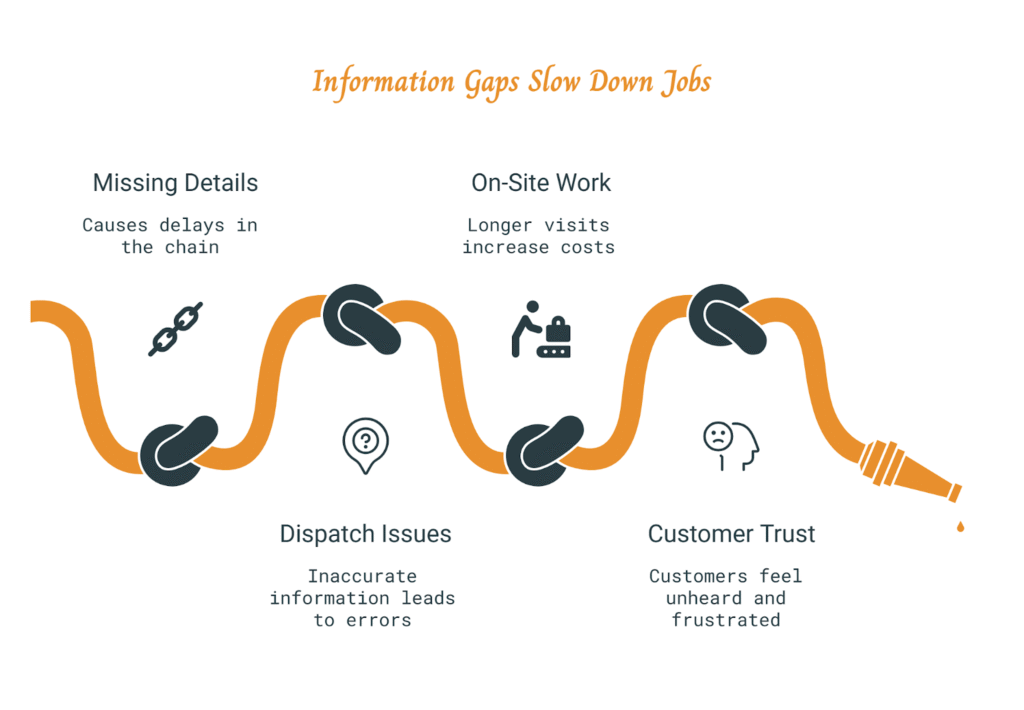
When information is split up like this, small annoyances turn into big problems. A tech shows up to a job site clueless about the past work. Your office manager has to ask Mrs. Jones for her address for the third time. Follow-ups vanish into the ether.
Whatever you’re doing, it’s not efficient. Centralizing your client details fixes these headaches at the source.
What “One Place” Actually Means
Now, when I say “keep it in one place,” I don’t mean dumping everything into a giant Excel sheet that takes ten minutes to load. That’s just a digital version of a junk drawer!
Modern electrical businesses need a system that actually connects customer info with the work you do every day. Think of it as a “hive mind” for your business. At a bare minimum, a centralized client record needs to have:
- Contact info and service address: So nobody goes to the wrong house.
- Job history and past notes: “What did we fix last time?” shouldn’t be a mystery.
- Estimates, invoices, and payment status: Who owes you money? You should know instantly.
- Communication logs: Emails, calls, and texts all in one timeline.
When this info lives together, anyone on your team, from the newbie apprentice to the office manager, can understand a customer’s entire history in seconds.
How This Saves Your Bacon Daily
You might be thinking, “I know where everything is… mostly.” But have you ever calculated how much time you waste hunting for it? Centralized data removes that friction like WD-40 on a rusty hinge.
1. Scheduling that doesn’t suck
When client details are easy to find, your office staff can schedule jobs faster than you can say “circuit breaker.” The address is correct. The gate codes are visible. The warning about the angry dog is right there in bold. No more frantic phone calls to double-check details.
2. Techs who look like geniuses
There is nothing worse than a technician showing up and asking the customer, “So, what did we do here last time?” It looks amateur. When your data is centralized, your techs arrive prepared. They can see previous work, service notes, and preferences before they even ring the doorbell. That leads to smoother visits and fewer return trips.
3. Customers who actually like you
Customers notice when they don’t have to repeat themselves. It makes them feel important. When everyone on your team sees the same information, your responses are consistent. You look professional, organized, and reliable.
4. Getting paid faster
Whether it is a reminder for future maintenance or a billing question, centralized records make follow-ups a breeze. You aren’t digging through three different folders to find an unpaid invoice. It’s right there.
The Secret Weapon: Field Service Software
So, how do the successful shops actually do this? They aren’t using magic, and they definitely aren’t using sticky notes. They rely on customer management software designed for field service teams.
With platforms like Field Promax, client details are tied directly to jobs, estimates, and invoices. It replaces those disconnected systems with one shared source of truth.
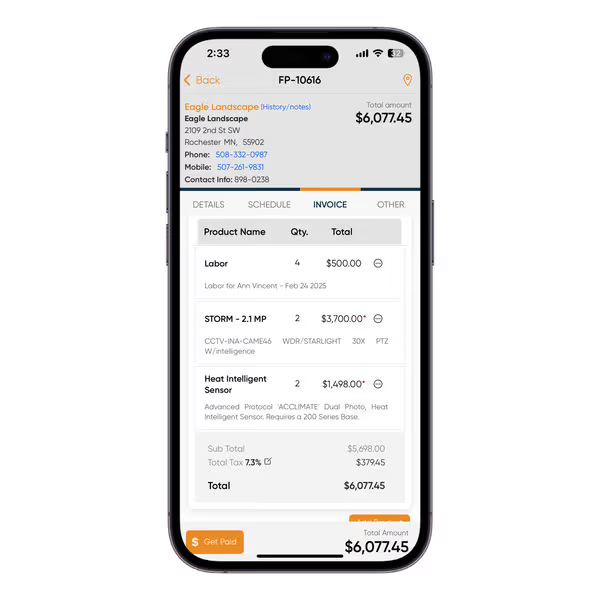
Imagine this: Instead of searching through your sent emails to find a quote from six months ago, your dispatcher opens a client profile, and boom, there it is. History, notes, photos, everything. That kind of visibility changes how you operate day-to-day.
Real World Scenario: The “Oops” vs. The “Pro”
The “Oops” Scenario (Before Centralization):
You rely on spreadsheets and email. A repeat customer calls about a breaker issue. Your office staff puts them on hold for ten minutes while they hunt for the file. They can’t find it. A technician is sent out blind, spends an hour diagnosing a problem you guys already looked at last year, and needs to go back to the shop for a part. The customer is annoyed. You lost money on labor.
The “Pro” Scenario (After Centralization):
You use centralized client records. The customer calls. Your office staff pulls up their profile instantly and says, “Hi Bob, is this about the panel we worked on last July?” Bob is impressed. The technician reviews the history on their phone before parking, grabs the right part, and fixes it in twenty minutes. Bob writes a 5-star review.
Nothing about the electrical work changed. The organization did.
Habits That Keep You Sane
Buying software won’t fix everything if you treat it like a garbage dump. Centralization only works if the info stays clean. Here are a few habits to bake into your team’s routine:
- Enter it once: Put client details in the system immediately and reuse them. Don’t type it into a text and then “promise” to add it to the computer later. You won’t.
- Force the notes: Make your technicians add brief job notes after each visit. No notes? No closing the job.
- Pick a format: Decide how you write addresses (St. vs. Street) and stick to it. It sounds petty, but it helps the search function work better.
- Spring cleaning: Review client records every once in a while to merge duplicates.
These steps don’t add extra work. They prevent rework. And nobody likes doing the same job twice for free.
Growing Without the Growing Pains
Here’s the truth: As your electrical business grows, the complexity grows with it. More techs, more jobs, more customers. If you don’t have centralized records, growth just creates more confusion.
With the right system in place, growth becomes manageable. New team members get up to speed quickly because the history is right there on the screen. Owners gain visibility without having to micromanage every single dispatch.
Many electrical contractors choose platforms that combine scheduling, billing, and client records in one dashboard, like the approach in Field Promax. It keeps things tight, tidy, and profitable.
Final Takeaway
Keeping client details in one place isn’t about loving technology. It’s about running an electrical business that feels reliable, prepared, and easy to work with.
Centralized client records reduce errors, save time, and improve service quality. With tools like Field Promax backing you up, you can stop playing detective with your own files and focus on what you do best: delivering great work.
FAQs
How much time does this actually save?
Honestly? A ton. For most electrical businesses, the biggest savings come from eliminating repeated questions and manual searches. Even if you only save five minutes per job, that adds up to hundreds of hours over a year. That’s time you could spend billing more work (or fishing).
Is this only for the big guys?
Nope! Small teams often benefit the most because the owner is usually wearing ten different hats. Having everything in one place reduces your mental load so you don’t burn out.
How long does it take to get organized?
Most businesses start seeing the light within the first few weeks. Once your job history and customer notes start flowing into the system, you’ll wonder how you ever survived without it.