
 By Heather Benac
You know that feeling when the trail forks, and the chatter of your hiking group fades behind you? I stood on a misty shoulder of Hokkaido’s Mt. Yotei, completely alone for the first time. The plan was a quick sunrise detour, but a rolling fog bank swallowed the path back. My heart hammered—a primal rhythm against the sudden, immense silence. It wasn’t fear of the mountain, but the deafening volume of my own doubts. “Did I tell anyone about this detour? What if I twist an ankle? Is that a bear or just a weird-shaped rock?” In that moment, solo hiking revealed its true face: not just a physical challenge, but a profound conversation with yourself. If you’ve ever felt the pull of a quiet trail but been held back by a chorus of “what-ifs,” you’re not alone. That ghostly presence on Yotei—part anxiety, part awakening—taught me more about preparation and self-reliance than a lifetime of guided treks.
What is Solo Hiking, Really? And Why It’s the Ultimate Adventure
Solo hiking is the deliberate act of embarking on a wilderness journey by yourself. It’s not necessarily about extreme isolation or biting off more than you can chew; it’s about self-paced discovery, unmediated connection with nature, and building a unique kind of resilience. This guide is your comprehensive manual to doing it right. We’re moving beyond the romantic idea to the practical, empowering reality. You’ll learn not just how to survive your first solo hike, but how to thrive, building confidence that seeps into every corner of your life. We’ll cover solo trekking safety, essential backpacking for one strategies, crucial navigation skills, risk management, and the transformative solo traveler mindset. By the end, that whispering ghost of doubt won’t scare you—it’ll guide you.
Part 1: The Solo Hiker’s Mindset – Conquering the Mental Trail First
Before you lace up your boots, you need to pack the right mindset. Solo hiking is 80% mental. The silence can be your greatest teacher or your loudest critic.
From Anxiety to Anticipation: Reframing Your Inner Dialogue
Your first enemy isn’t weather or terrain—it’s your own brain spinning “disaster movies.” The key is to replace anxiety with purposeful anticipation.
- Acknowledge, Then Act: It’s normal to feel nervous. Instead of fighting it, write down your specific fears. “Getting lost.” “Injury.” “Loneliness.” This list becomes your preparedness checklist, not your doomscroll.
- Embrace the “Why”: Why do you want to do this? Is it for peace, challenge, or freedom? Keep this reason at the forefront. As noted by adventure psychologists, having a clear, personal intention significantly increases positive outcomes and resilience on solo journeys (Source: Journal of Adventure Education and Outdoor Learning).
Building Your Confidence Toolkit
Start small. Your first solo hike shouldn’t be a multi-day backcountry ordeal.
- Practice “Alone Time” on Familiar Trails: Hike a well-known local loop you’ve done with friends, but this time, go solo. Focus on your own rhythm.
- Master Positive Self-Talk: When a hill looks steep, try “This is a challenge I’m prepared for,” instead of “I can’t do this.” Your words shape your reality.
Part 2: The Non-Negotiables: Your Solo Hiking Safety and Gear Checklist
As someone who’s logged hundreds of solo trail miles, I can say with authority: your gear is not just stuff; it’s your safety net, your companion, and your confidence. Here’s what you truly need.
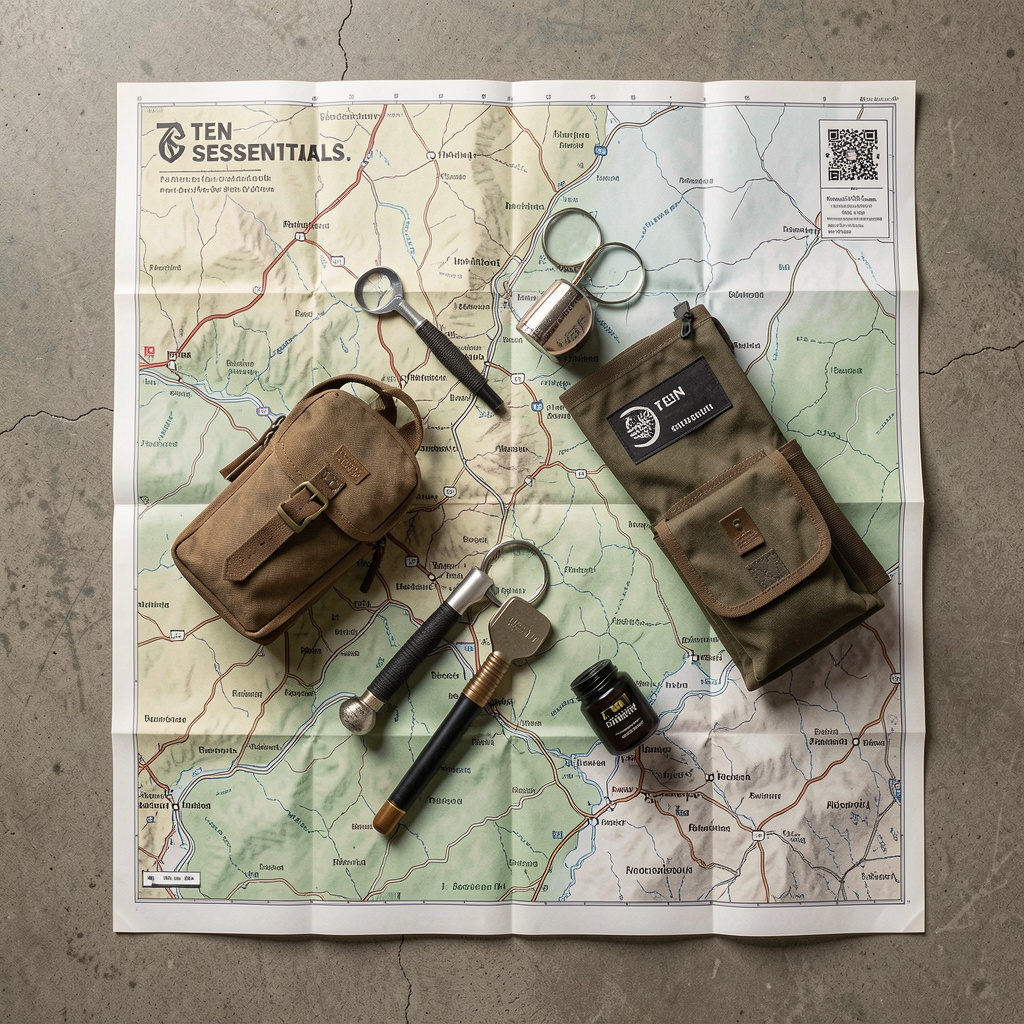
The Ten Essentials – Solo Edition
This classic list gets amplified when you’re alone. Assume no one is coming to help you quickly.
- Navigation (Map, Compass & GPS): A physical topo map and compass (and the skill to use them) are non-negotiable. Electronics fail. A dedicated GPS device or a phone with offline maps (like Gaia GPS) is your backup.
- Headlamp & Extra Batteries: Getting caught in the dark alone is disorienting. A bright, reliable headlamp is a morale-saver.
- First-Aid Kit: Don’t buy a pre-made mini-kit. Build one tailored to you. Include blister care, any personal meds, and a guide. Consider a wilderness first aid course—it’s the best investment a solo hiker can make.
- Knife or Multi-Tool: For gear repair, preparing food, or emergency scenarios.
- Fire Starters: Waterproof matches, a lighter, and a backup like a ferro rod. The ability to make fire is crucial for warmth and signaling.
- Emergency Shelter: A lightweight bivvy sack or space blanket. If you’re immobilized, this can be a lifesaver.
- Extra Food & Water: Add at least one extra day’s worth of calories. For water, always carry a purification method (filter, tablets) and know where your sources are.
- Extra Clothes: Hypothermia is a real risk, even in mild weather. Pack an insulating layer and a waterproof shell.
- Sun Protection & Insulation: Hat, sunglasses, sunscreen. Your extra clothes cover insulation.
- Communication & Signaling: A fully charged phone in airplane mode, a portable power bank, and a Personal Locator Beacon (PLB) or Satellite Messenger. This is my #1 recommendation for solo hikers. Devices like a Garmin inReach allow two-way texting and SOS anywhere. It’s the ultimate peace of mind for you and your loved ones.
Pro Tip: The “Shakedown” Hike
Before any big solo trip, do a full-gear “shakedown” on a short, safe trail. Wear your loaded pack, use your water filter, eat your snacks. You’ll find out what chafes, what’s missing, and what you can leave behind.
Part 3: Navigation Mastery – Never Get Lost Again
Getting temporarily misplaced is part of adventure; being truly lost is dangerous. Let’s build your skills.
Old School Meets New School
Relying solely on a phone is a recipe for trouble. Become bilingual in navigation.
- Topo Map & Compass Basics: Understand contour lines (they show steepness!), identify key landmarks, and learn to take a bearing. Resources like REI’s expert guides offer fantastic free tutorials.
- Digital Aids as a Backup: Use apps like AllTrails or Gaia GPS, but always download the map for offline use. Keep your phone in airplane mode to conserve battery.
The Art of Continuous Awareness
The best navigators aren’t constantly checking their GPS; they’re always aware.
- Look Back: Every 10-15 minutes, turn around and memorize what the trail looks like from the return direction. It’s surprisingly different!
- Track Key Waypoints: That weird tree, the stream crossing, the big boulder. Mentally tick them off as you pass.
Part 4: Risk Management & Handling Common Solo Hiking Scenarios
Planning for things to go wrong is what allows everything to go right. Here’s how to tackle common solo hurdles.
Encountering Wildlife
Most animals want to avoid you. Your job is to not surprise them.
- Make Noise: Sing, talk to yourself, or attach a bell to your pack in dense brush or known bear country.
- Carry Bear Spray where appropriate, and know how to use it—not buried in your pack.
- If You See Wildlife: Give them space. Never run. Back away slowly. Most negative encounters are due to getting too close for that “perfect shot.”
Injury Prevention and Response
A solo sprained ankle is a major event.
- The “Three Points of Contact” Rule: Move deliberately, especially on tricky terrain. Always have three limbs or contact points stable.
- Have a Crisis Plan: If you are injured and have a satellite messenger, use it. If not, can you self-evacuate? If not, stay put, make shelter, signal for help. A study in Wilderness & Environmental Medicine shows that staying on the trail once immobilized increases the speed of rescue dramatically.
Dealing with Loneliness or Fear
The mind can play tricks. Have a strategy.
- Anchor to Your Senses: When anxiety spikes, name 5 things you see, 4 you feel, 3 you hear, 2 you smell, 1 you taste. It grounds you instantly.
- Bring a “Comfort Item”: A small journal, a favorite snack, or a podcast for a planned break can reset your mood.
Part 5: The Trail’s Gift – Embracing the Solitude and Transformation
This is the magic you came for. When the safety is managed and the skills are practiced, what’s left is pure, golden experience.
The Joys You Can’t Get in a Group
You set the pace. You choose the breaks. You follow that mysterious side trail for an hour just because. You sit by a lake for as long as you want, with no need to make conversation. This uninterrupted flow state is where creativity sparks and stress truly melts away.
Returning Home Changed
You’ll carry the confidence of your solo hike long after the trail dust is washed away. That difficult project at work? You’ve handled harder. That awkward social situation? You’ve navigated literal wilderness. The solo traveler mindset—self-reliance, adaptability, calm problem-solving—becomes a part of you. You realize the “ghost” was never out to get you; it was your own capable spirit, waiting to be acknowledged.
Frequently Asked Questions (FAQ)
Q: Is solo hiking dangerous?
A: It carries inherent risks, but it’s not inherently dangerous. With meticulous planning, proper gear (especially communication devices), and honest self-assessment of your skills, you can mitigate most risks to an acceptable level. It’s about managed adventure.
Q: What’s the best trail for a first-time solo hiker?
A: Choose a well-marked, popular (but not crowded) trail you’ve hiked before. Opt for something under 5 miles with minimal elevation gain. A national park or state park with reliable cell service is an excellent starting point.
Q: How do I deal with creepy people on the trail?
A: Trust your intuition. Be aware but not overly fearful. A confident demeanor and brief, polite responses are best. Having a PLB allows you to discreetly signal for help if truly threatened. Most fellow hikers are wonderful, but it’s smart to be situationally aware.
Q: Do I need a satellite messenger for a short day hike?
A: It’s highly recommended, even for day hikes. Accidents can happen a mile from the trailhead. For peace of mind—yours and your emergency contact’s—it’s the most important piece of safety tech a solo hiker can own.
Q: How do I stay motivated when I get tired and alone?
A: Break the hike into small, manageable goals (“Just to the next bend in the trail”). Use positive self-talk, play music from a speaker (where appropriate), and promise yourself a fantastic reward at the end (like a favorite meal).
Your Trailhead to Transformation: Key Takeaways
- Mindset is Your Foundation: Prepare mentally, practice positive self-talk, and start with small confidence-building hikes.
- Gear is Your Safety Net: The Ten Essentials are gospel, and a satellite messenger/PLB is your most critical tool for solo trekking safety.
- Navigation is a Required Skill: Be proficient with a map and compass, using digital tools as a backup only.
- Plan for the Worst to Enjoy the Best: Have clear protocols for wildlife, injury, and fear. This planning frees you to enjoy the moment.
- The Reward is Profound: The confidence, peace, and self-reliance you gain from solo hiking will change how you move through the entire world.
That ghost on Yotei? I’ve made peace with it. Now, it’s less a specter of fear and more a quiet companion—a reminder of my own preparedness and strength. Your trail is waiting. Lace up, plan smart, and go have that conversation with yourself. The mountains have so much to tell you.
What’s the biggest question holding you back from your first solo hike? Share your thoughts or your own tips in the comments below!
YOU MAY ALSO LIKE: 15 Mind-Blowing Fun Facts About Guatemala You Never Knew