
 By Prime Star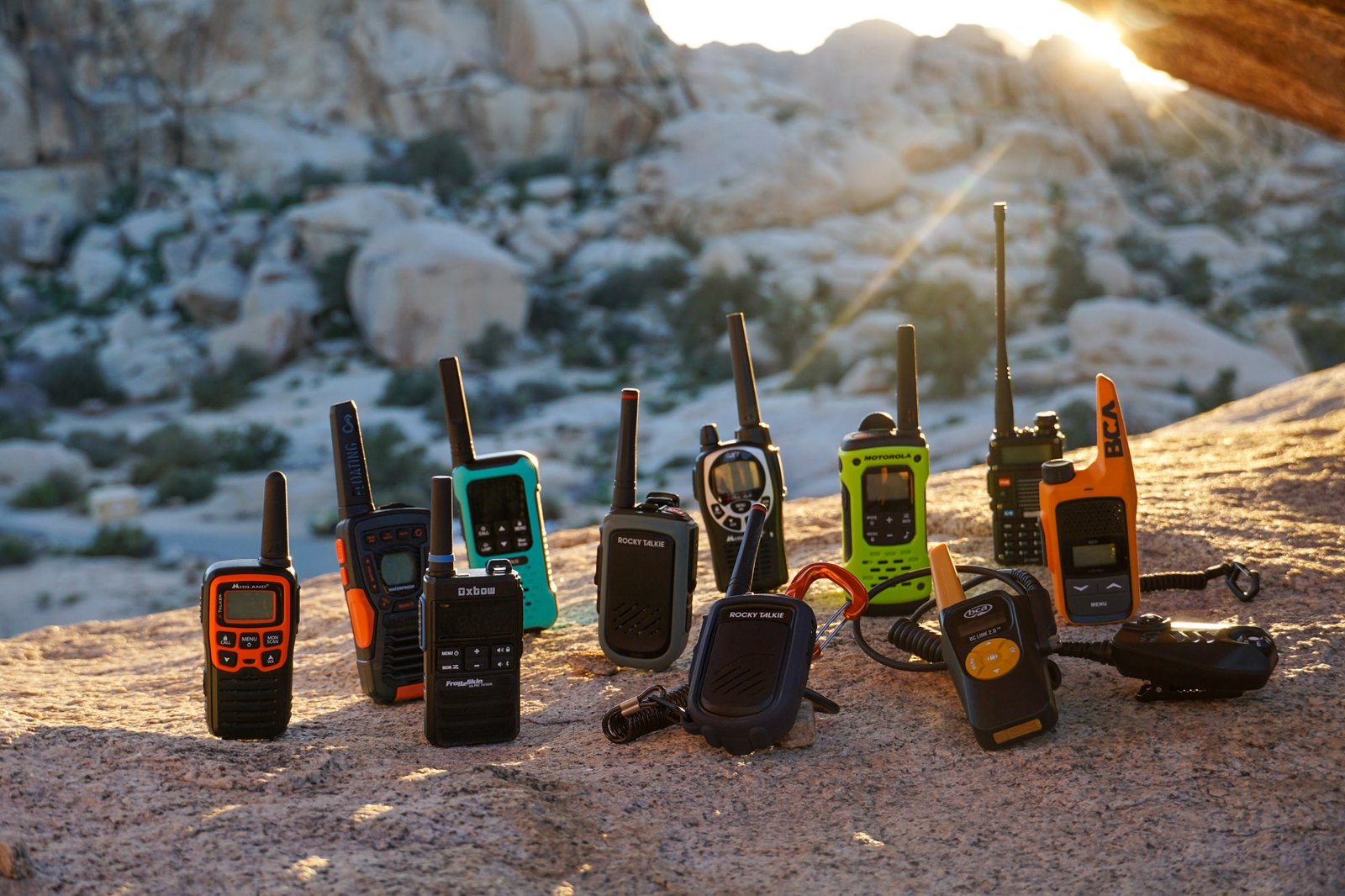
Exploring remote areas without cellular service can be peaceful, but it becomes dangerous during medical emergencies or severe weather. Since smartphones are unreliable in such locations, packing the right long-range communication gear is crucial for staying in contact with your team or calling for rescue.
Traditional Radio Options for Line-of-Sight
Short-range walkie-talkies work fine for a local park, but serious expeditions require robust two-way radios. Understanding the differences between consumer and professional-grade frequencies helps you choose the right tool for local coordination.
GMRS Radios
General Mobile Radio Service (GMRS) provides a massive step up from basic consumer radios. Operating on specific FM frequencies, GMRS devices allow for higher power outputs, often reaching up to 50 watts for mobile units and 5 watts for handhelds. This increased power helps push signals through light foliage and across open valleys. They are excellent for coordinating a group spread out over a few miles, provided there are no massive mountains blocking the signal path.
UHF and VHF Handhelds
Ultra High Frequency (UHF) and Very High Frequency (VHF) radios are the standard for professional guides and serious outdoor enthusiasts. VHF waves travel further outdoors in open terrain because they hug the earth slightly and pass through light obstacles. UHF waves are shorter, making them better for penetrating dense woods, tight canyons, or urban environments. Many expedition teams carry dual-band radios to switch between VHF and UHF depending on the immediate landscape.
Evaluating Power, Battery Life, and Durability
Your communication gear is entirely useless if the battery dies or the casing shatters on a rock. Wilderness environments are notoriously harsh on sensitive electronics.
High-powered transmissions drain batteries rapidly. If you are transmitting at 5 watts on a handheld radio, you will deplete a standard lithium-ion battery in a matter of hours. To counter this, expedition members must carry spare batteries, solar chargers, or high-capacity power banks. Cold weather also degrades battery performance significantly. Keeping your radio or spare batteries inside your jacket close to your body heat will help preserve their charge.
Durability is another major concern. Look for devices with high Ingress Protection (IP) ratings. An IP67 rating ensures the radio is completely dust-tight and can survive temporary submersion in water. Rubberized grips, reinforced antennas, and shatter-resistant screens are essential features for gear that will inevitably be dropped, scraped, and exposed to the elements.
Navigating Legal and Licensing Requirements
You cannot simply buy a high-powered radio and start broadcasting on any channel you want. Governments heavily regulate radio frequencies to prevent interference with emergency services, aviation, and maritime operations.
In the United States, operating a GMRS radio requires a license from the Federal Communications Commission (FCC). Fortunately, this license does not require a test; you simply pay a fee, and it covers your immediate family members.
Using more advanced VHF/UHF equipment, such as amateur (ham) radios, requires passing a technical exam to earn a license. This ensures operators understand frequency allocations and emergency protocols. If you are traveling internationally, research local laws thoroughly. A radio frequency that is perfectly legal for consumer use in North America might be reserved for military use in a South American or European country, leading to steep fines or confiscated gear.
Emergency Signaling and Base Camp Best Practices
Having the gear is only half the equation. Establishing clear protocols for how and when to use it keeps your team safe and conserves vital battery life.
Always establish a strict communication window with your base camp or support team. For instance, agree to turn on radios and attempt contact at exactly 8:00 AM and 8:00 PM every day. This prevents people from wasting battery power trying to hail someone who has their radio turned off.
For emergencies where traditional radios fail due to distance or terrain, teams should carry a Personal Locator Beacon (PLB) or a satellite messenger. These devices bounce signals off orbiting satellites, virtually guaranteeing a message gets out regardless of line-of-sight obstructions. Portable satellite internet is another powerful option for large base camps, allowing teams to pull down real-time weather data and send emails, though it is usually too bulky for fast-and-light alpine climbs.
Always agree on emergency code words and contingency plans. If a check-in is missed, base camp needs to know exactly how long to wait before initiating a search and rescue operation.
Conclusion
Selecting the right communication setup comes down to analyzing your specific route, your group size, and your distance from civilization.