
 By Siam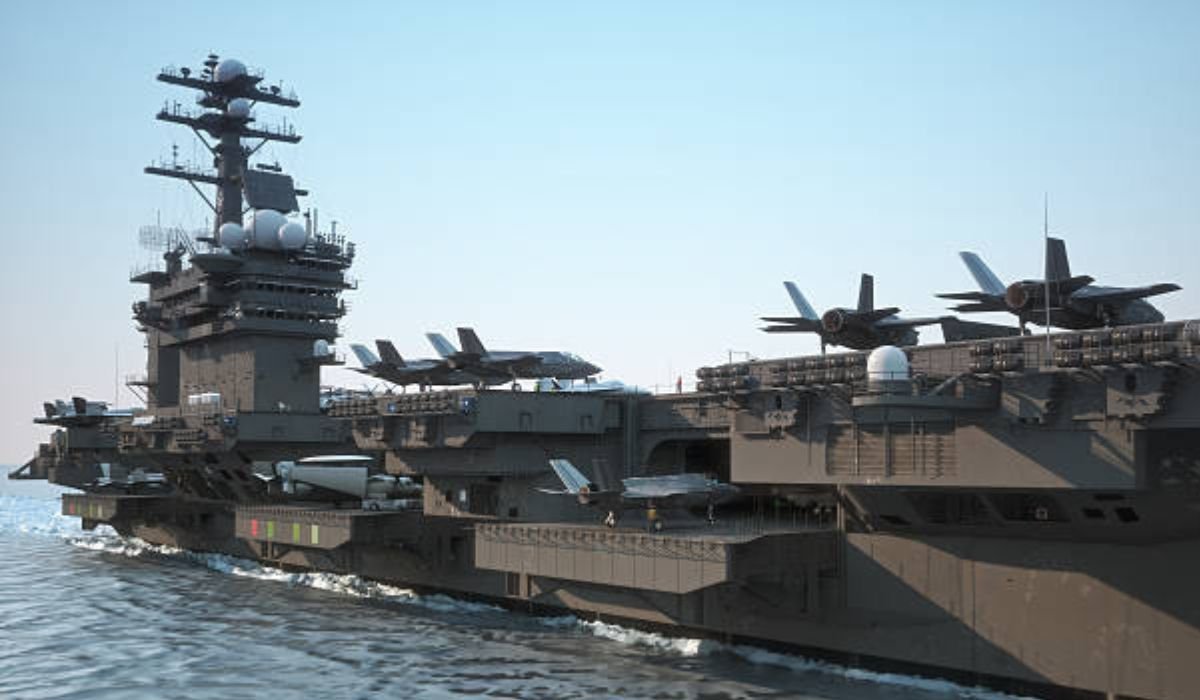
The space force orbital warship carrier is quickly moving from concept art to real hardware, and it could completely rewrite how wars are fought in space. Imagine a massive platform already parked in orbit, ready to launch swarms of smaller spacecraft at a moment’s notice—no waiting for a rocket from Florida or California. That’s exactly what the U.S. Space Force is building with partner Gravitics.
Announced in 2025, this project (officially called the Orbital Carrier) has already secured up to $60 million in funding. It’s designed to give America the ultimate edge in a domain that’s becoming more contested every day. China and Russia are testing anti-satellite weapons, and traditional satellite launches can take months or years. The space force orbital warship carrier changes the game by pre-positioning assets exactly where they’re needed.
In this guide, we’ll break down what the space force orbital warship carrier actually is, how it works, why the military wants it so badly, its current status, and what it means for the future of space defense. Whether you’re a defense buff, space enthusiast, or just curious about the next frontier of military tech, you’ll walk away with a clear picture of this groundbreaking platform.
The Need for a Space Force Orbital Warship Carrier
Space isn’t peaceful anymore. In the last few years, both China and Russia have demonstrated the ability to destroy satellites from the ground. The U.S. relies on hundreds of satellites for everything from GPS to missile warning to secure communications. Lose those assets, and modern warfare grinds to a halt.
The U.S. Space Force was created in 2019 precisely because leaders recognized this vulnerability. But building and launching replacement satellites the old way—waiting for a big rocket, booking a slot, and hoping weather cooperates—just isn’t fast enough anymore.
Enter the space force orbital warship carrier. Instead of launching everything from Earth every time there’s a problem, the military wants a “mother ship” already in orbit. Think of it like an aircraft carrier that never has to sail home to rearm. It sits up there, stocked with smaller maneuverable spacecraft, ready to deploy them on demand.
This approach is called “tactically responsive space.” The goal? Replace a damaged spy satellite in hours or days instead of months. Block an enemy laser dazzling your sensors instantly. The space force orbital warship carrier makes all of that possible.
How the Space Force Orbital Warship Carrier Actually Works
At its core, the space force orbital warship carrier is a large, unpressurized platform that lives in Earth orbit. It carries multiple smaller “maneuverable space vehicles” inside or attached to it.
When commanders need action, the carrier opens up (picture giant doors or panels unfolding) and releases the right spacecraft for the mission. Those smaller craft then use their own propulsion to reach the exact orbit required—whether that’s low Earth orbit for quick response or higher for longer missions.
Gravitics CEO Colin Doughan explained it perfectly: the platform acts as a “pre-positioned launch pad in space.” No more dealing with Earth’s gravity, weather, or launch windows. You simply tell the system where you need coverage, and it deploys.
The design draws directly from naval aircraft carriers. Just as a carrier keeps fighter jets ready to scramble, the space force orbital warship carrier keeps satellites and other vehicles ready to scramble into position. Early concepts show a satellite-style structure that can expand or open once safely in orbit.
Key Capabilities That Make It Revolutionary
The space force orbital warship carrier isn’t just another satellite bus. Here’s what sets it apart:
- Rapid deployment: Release multiple vehicles in minutes instead of waiting weeks for a ground launch.
- On-demand orbit selection: Choose the perfect altitude and inclination after the carrier is already in space.
- Pre-positioned assets: Keep spares or specialized craft ready for threats you see coming.
- Tactical flexibility: Counter jamming, replace failed satellites, or even support future missile-defense concepts from orbit.
- Scalable design: The first demonstrator (called Diamondback) is smaller, but future versions could carry thousands of kilograms of payload.
Future versions might even support space-to-ground missions or act as a forward base for larger operations. The possibilities are expanding as the technology matures.
Current Status and Development Timeline
As of early 2026, the space force orbital warship carrier is firmly in the demonstration phase. Gravitics won the SpaceWERX STRATFI contract in March 2025 with potential funding reaching $60 million. The money comes from a mix of government, SBIR, and private sources—exactly the public-private model the Space Force loves.
Gravitics expects to show the platform operating in space and successfully deploying assets as early as 2026. They’ve already unveiled the smaller Diamondback version, which is designed to protect national security satellites and could eventually deploy space-based interceptors.
This isn’t some far-off dream. The company has a track record with big projects (including work for Axiom Space), and Space Force leaders have made “space superiority” their top priority. The space force orbital warship carrier is a direct answer to that imperative.
Strategic Advantages Over Traditional Space Operations
Traditional launches are expensive, slow, and predictable. Adversaries can watch the countdown and prepare. The space force orbital warship carrier flips the script.
It gives the U.S. the ability to surge capability exactly when and where it’s needed. Need to fill a gap in missile-warning coverage over the Pacific? Deploy a fresh sensor package from orbit. Enemy trying to blind your reconnaissance satellites? Release countermeasures immediately.
This pre-positioned approach also reduces reliance on vulnerable ground infrastructure. No more worrying about launch pads being targeted or weather delaying critical missions. The carrier is already where the fight is—hundreds of miles above Earth.
Military planners compare it to how aircraft carriers transformed naval warfare in the 20th century. The space force orbital warship carrier could do the same for space operations in the 21st.
Challenges and Realistic Hurdles Ahead
No new military system comes without obstacles. The space force orbital warship carrier faces some big ones:
- Orbital mechanics: Keeping a large platform stable while releasing smaller craft requires precise control.
- Power and propulsion: The carrier needs enough energy and fuel to maneuver and stay in the right orbit for years.
- Cost and scale: Even with $60 million for the demo, full operational versions will be expensive.
- International treaties: Space weapons remain politically sensitive, though this platform is framed as defensive and responsive.
- Technical risk: Deploying multiple vehicles reliably in the harsh environment of space is unproven at this scale.
Gravitics and the Space Force are tackling these step by step. The 2026 demonstration will be the first real test of whether the concept works as promised.
The Future of the Space Force Orbital Warship Carrier
If the demonstration succeeds, expect rapid scaling. Multiple carriers could patrol different orbital regimes—some focused on low Earth orbit for quick response, others higher up for persistent coverage.
Longer term, these platforms could evolve into true space bases, supporting crewed missions, refueling operations, or even offensive capabilities if policy changes. The technology also has civilian spin-offs: faster deployment of commercial satellites, space tourism support, or orbital manufacturing hubs.
The space force orbital warship carrier isn’t just about today’s threats. It’s about building the infrastructure for a future where space is the decisive domain.
Why This Matters to You
Even if you’re not in uniform, the space force orbital warship carrier affects everyday life. GPS, weather forecasts, internet, banking—all rely on satellites. Protecting that infrastructure keeps modern society running. Plus, the tech developed here will likely trickle down to commercial spaceflight, making launches cheaper and more frequent for everyone.
The race for space superiority is on, and the United States is betting big on the space force orbital warship carrier to stay ahead.
Conclusion
The space force orbital warship carrier represents one of the most exciting and important developments in military space technology today. By turning orbit itself into a responsive launch platform, it gives the U.S. Space Force speed, flexibility, and resilience that traditional methods simply can’t match.
With demonstration flights targeted for 2026 and strong backing from both government and industry, this project is moving fast. Keep watching—within a few years, the idea of an orbital warship carrier might go from headline to everyday reality in space news.
Ready to stay ahead of the curve? Bookmark this page and follow official Space Force and Gravitics updates for the latest on this game-changing platform.
FAQs
What is the space force orbital warship carrier?
It’s a large orbital platform developed for the U.S. Space Force that acts like an aircraft carrier in space. It stores and rapidly deploys smaller maneuverable spacecraft to respond to threats or fill satellite gaps on demand.
Who is building the space force orbital warship carrier?
Seattle-based company Gravitics is the prime contractor, working under a Space Force SpaceWERX STRATFI contract. The project combines military requirements with commercial space expertise.
When will the space force orbital warship carrier launch?
The first demonstration flight is planned for 2026. Full operational versions could follow in the late 2020s depending on how the initial tests perform.
How much does the space force orbital warship carrier cost?
The current demonstration phase is funded up to $60 million. Total program costs for multiple operational carriers have not been publicly disclosed but will likely run into the billions over time.
Is the space force orbital warship carrier armed?
Not in the traditional sense. Its primary role is deploying defensive or responsive satellites and spacecraft rather than carrying kinetic weapons, though future versions could support a wider range of missions.
How is the space force orbital warship carrier different from normal satellites?
Regular satellites are launched individually from Earth. The carrier stays in orbit permanently and can release multiple craft whenever needed, bypassing ground launch delays and limitations.
Will the space force orbital warship carrier replace traditional rocket launches?
No. It complements them by handling rapid, in-orbit response. Big new satellites and heavy cargo will still need ground launches.
Can other countries build their own orbital warship carriers?
In theory yes, but the U.S. currently leads thanks to the Gravitics partnership and Space Force investment. China and Russia are watching closely and may pursue similar concepts.
What is Diamondback in relation to the space force orbital warship carrier?
Diamondback is the name of the smaller demonstrator version unveiled by Gravitics in late 2025. It’s the first hardware that will prove the full carrier concept in space.
How does the space force orbital warship carrier help against anti-satellite threats?
It lets commanders quickly replace damaged satellites or deploy countermeasures without waiting for a ground launch, keeping critical constellations intact during conflict.