
 By Arthur
Every guidebook gives you the same four stops in Sultanahmet: the Hagia Sophia, the Blue Mosque, Topkapı Palace and the Basilica Cistern. They deserve their fame. But once you have seen them, something interesting happens if you keep walking. Turn downhill, away from the main square, and within five minutes the crowds thin out and a different Old City appears: quieter, older-feeling and full of places most visitors walk straight past.
This is a short route through those corners, ending where the best views are.
Soğukçeşme Street
Start beside the Hagia Sophia and look for Soğukçeşme Sokağı, a narrow cobbled lane running along the outer walls of Topkapı Palace. It is lined with restored wooden Ottoman houses painted in soft pastel colours. On one side, the high stone walls of the palace. On the other, little balconies and window boxes. Early in the morning you may have it entirely to yourself.
The Arasta Bazaar
Walk back past the Blue Mosque and slip behind it into the Arasta Bazaar. This small, single-street market was built in the seventeenth century, and the rent from its shops once helped to pay for the upkeep of the mosque. Today it is a calm alternative to the Grand Bazaar, with carpet, ceramic and textile shops where the pace is slower and the bargaining gentler.
The Great Palace Mosaic Museum
Halfway along the Arasta, a modest entrance leads to one of the most underrated museums in the city. The Great Palace Mosaic Museum protects floor mosaics from the Byzantine emperors’ palace that once stood on this hillside. Hunters, animals, children playing and mythical creatures cover the floors in tiny stone tiles. Most visitors to Sultanahmet never know it is here.
Akbıyık Street
Just below the Arasta runs Akbıyık Caddesi, one of the most characterful streets in the Old City. It is lined with small guesthouses, cafés and family-run shops, and it has a relaxed, neighbourhood feel that is hard to find around the main square. This is where many independent travellers choose to stay, and for good reason: it is a few minutes’ walk from the Hagia Sophia but feels a world away from the crowds.
Little Hagia Sophia
Continue west along the old streets towards the water and you reach Küçük Ayasofya, the “Little Hagia Sophia”. Built in the sixth century as the Church of Saints Sergius and Bacchus, it is slightly older than its famous namesake and was converted into a mosque in Ottoman times. It is small, peaceful and beautifully proportioned, and you will often find only a handful of visitors inside.
Sokollu Mehmed Paşa Mosque
A short climb uphill brings you to one of the hidden treasures of Istanbul. Designed by Mimar Sinan, the great Ottoman architect, in the 1570s, the Sokollu Mehmed Paşa Mosque is small from the outside. Inside, its walls are covered in some of the finest İznik tiles in the world: deep blues, turquoise and the famous coral red. Visit outside prayer times and dress modestly.
The sea walls
Finally, walk down to the shore. The old Byzantine sea walls still run along the Marmara coast here, and a seaside path follows them past the Ahırkapı lighthouse. Local families picnic on the grass, fishermen cast from the rocks, and the ships waiting to enter the Bosphorus sit on the horizon. It is the perfect place to rest your legs.
End with the view
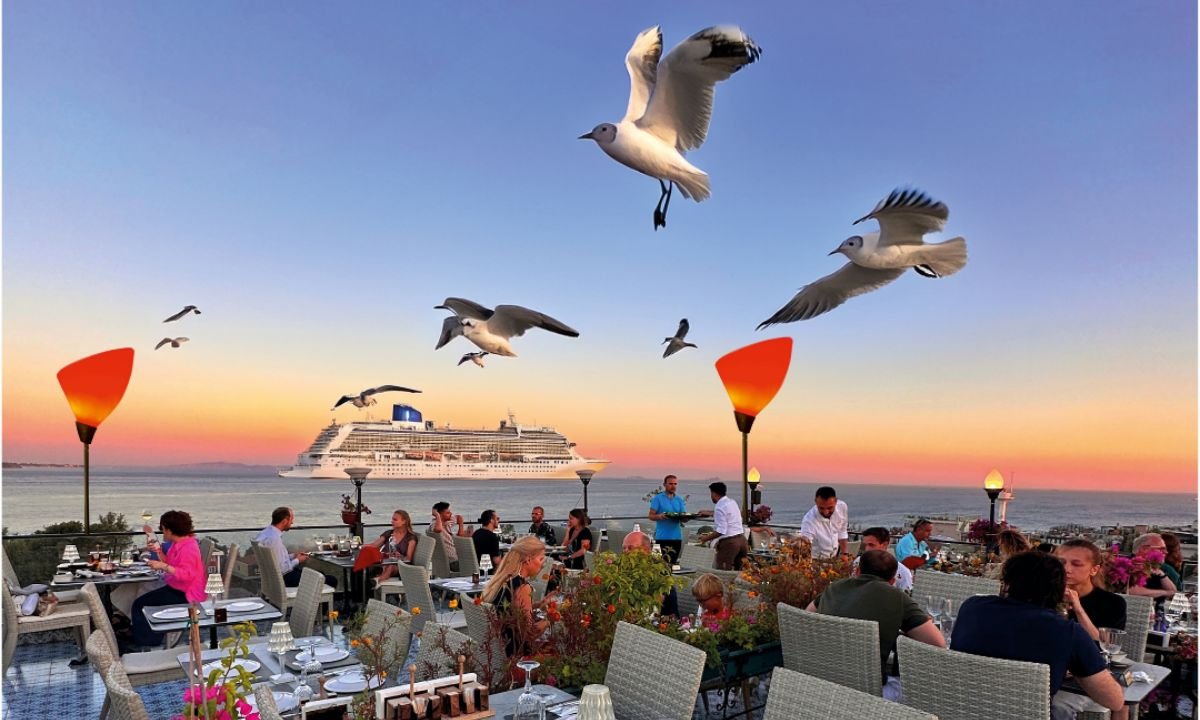
After a day spent exploring the quiet side of the Old City, it is worth seeing the whole picture from above. Walk back up to Akbıyık Street, where Queb, a rooftop restaurant with Hagia Sophia view, sits just minutes from the monument. Its terrace takes in both the Hagia Sophia and the Bosphorus from a single table, so you can look back over the streets you have just explored and out to the water beyond.
It works just as well as a morning start, with a traditional Turkish serpme breakfast before the route, or as the final stop for dinner as the lights come on.
Route notes
- Distance: About 4 kilometres in total, mostly downhill to the sea and a gentle climb back.
- Time: Allow half a day with stops.
- Mosques: Cover shoulders and knees; women will need a headscarf.
- Museums: Check opening days and times before you go.
The famous sights will always draw the crowds. But the Sultanahmet you remember may well be the one you found between them.