
 By Arthur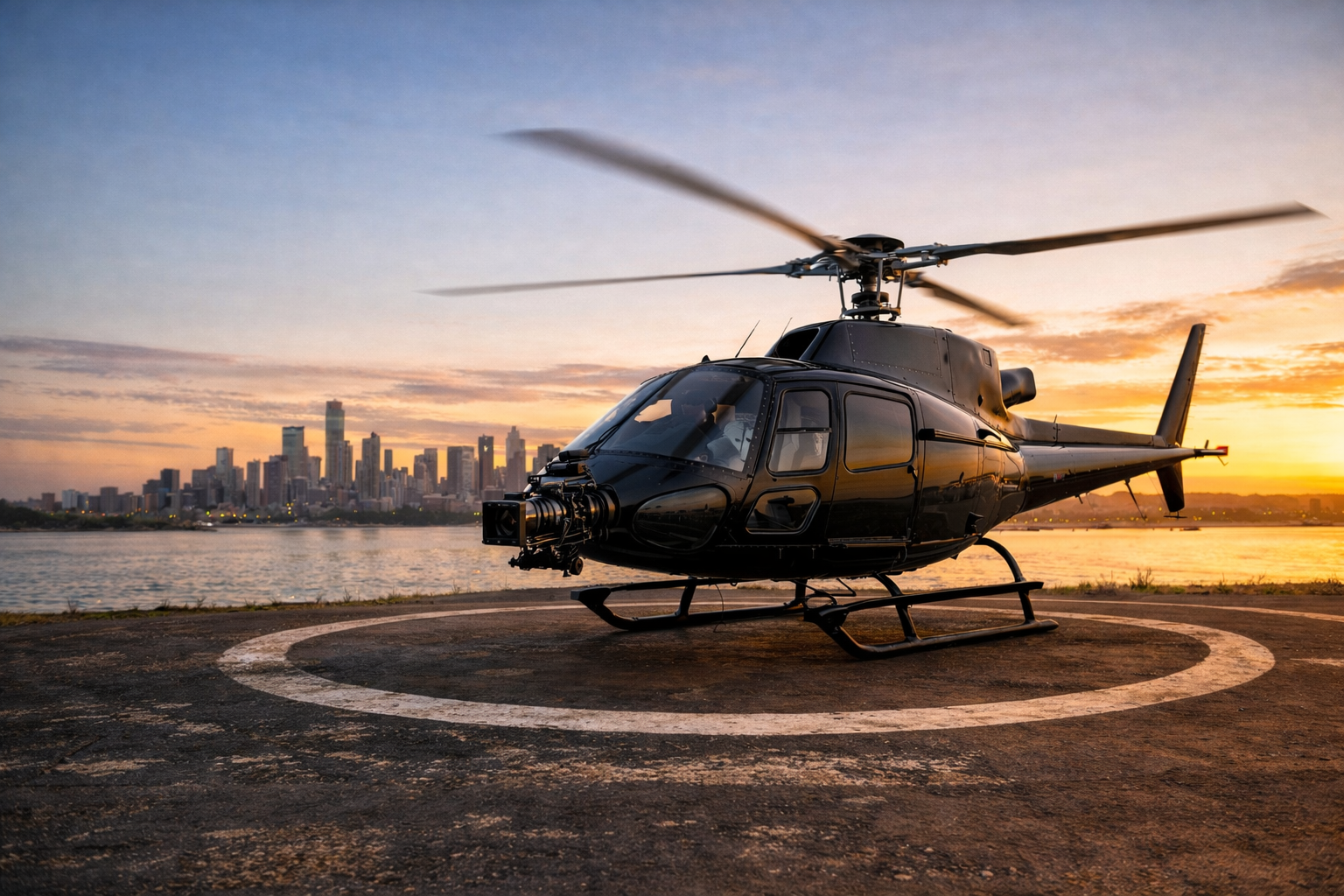
This blog breaks down why helicopter aerial cinematography is a go-to for film, TV, and commercial productions. It covers how perspective, scale, motion, and the New York skyline create visuals that ground cameras simply can’t match, and what brands and directors gain by going aerial.
It Starts With Perspective
Lenses are sharper than ever, rigs are smarter, and operators are incredibly skilled. But there’s one thing no ground setup can give you: height.
When a helicopter rises above a city, a coastline, or a crowd, the frame gets wider, and it also completely changes. The viewer’s relationship to the scene shifts. Suddenly you understand where things are, how big they are, and why they matter.
That’s what Helicopter Aerial Cinematography actually does. It adds a cool angle and it reframes the whole story.
Scale Is Hard to Fake
Ground cameras can suggest scale with wide lenses or clever framing, but it’s always a trick. Aerial footage earns it. A stadium from 800 feet looks like a stadium. A coastline from above the waterline shows you things you’d never see from the shore. A city skyline has a shape that only exists when you’re far enough back to see it all at once.
For brand work, this matters a lot. You’re not just showing a product or a place, you’re making a visual argument about size and importance. Aerial footage makes that argument fast and without effort.
Motion That Actually Moves
Slow, floating drone pushes are everywhere now. They’re beautiful, but audiences have seen a lot of them.
Helicopter work moves differently, it can track a car across miles of open road, pull back to show the landscape it’s crossing, and sweep around to reveal what’s ahead, all in one continuous shot.
That range is part of what makes helicopter filming so useful for high-end productions. The pilot and cinematographer work together so the aircraft moves for the shot, not around it. The result is footage that feels alive in a way that stationary or short-range aerial tools can’t replicate.
The New York Advantage
New York is one of the most filmed cities in the world and yet, from the air, it still stops people cold.
The Hudson River, the Manhattan grid, the bridges, the boroughs spreading out in every direction, these aren’t just backdrops. They’re visual storytelling tools. Productions use them to set the scene, raise the stakes, and signal ambition within the first few seconds of a shot.
Wings Air Helicopters operates right in that environment. Their aerial film production team has worked with major studios on feature films, TV shows, documentaries, commercials, and corporate productions, in New York and internationally. With SAG-certified pilots and over 50 combined years of experience, they know how to make the city work for your shoot.
It’s Not Just for Big Films.
Brands in automotive, real estate, hospitality, and corporate video regularly use aerial footage for campaigns where the visuals need to carry real weight. The logic is simple: when you put your product or your story in that kind of visual context, the scale and authority of the shot transfer to what you’re selling.
And when you factor in the cost of trying to fake that shot from the ground, cranes, multiple angles, post-production stitching, and still not quite getting there, going aerial often makes more practical sense than people expect.
The Equipment Behind the Shot
Modern helicopter filming rigs are built to solve one problem: keeping the shot clean while the aircraft is moving. Gyro-stabilized mounts absorb vibration, turbulence, and the mechanical movement of the helicopter itself. What the camera operator sees is smooth and controllable, even at altitude and speed.
Wings Air uses systems like the Shotover F1 and K1 rigs, industry-standard equipment built for professional cinema cameras. The result is footage that holds up on any screen size, from a phone to a theater.
When the equipment is right and the pilot knows how to fly for the camera, disaster relief helicopter service level precision carries over into every production mission too, because the same operational discipline that makes a helicopter reliable in an emergency is what makes it reliable on a film set.
FAQ
Can helicopter aerial filming work for smaller commercial productions, not just major films?
Yes, and it’s more common than people think. Brands across real estate, automotive, hospitality, and corporate video use helicopter aerial work regularly. The deciding factor isn’t production size, it’s whether the story benefits from that perspective. Often it does.
What makes a SAG-certified pilot different from a regular helicopter pilot on a film set?
SAG pilots are trained to work within professional film production schedules and communication rhythms. They understand timing, how to hold position for a shot, and how to move the aircraft to serve the camera operator, not just get from point A to point B safely. It makes a real difference in how smoothly a shoot day runs.
What does helicopter filming offer that drones can’t?
Drones are great for close-proximity and low-altitude work. Helicopters offer range, flight duration, payload capacity, and stability at speed that drones can’t match. Most high-end productions use both, drones for detail shots, helicopters for the wide, sweeping sequences that define a project’s visual identity.
How far ahead does helicopter aerial production need to be planned?
More lead time than a standard shoot day. Airspace coordination, weather, equipment setup, and pre-shoot prep with the director all take time. The more complex the sequence, the earlier the conversation needs to start. Productions that plan aerial work from the beginning consistently get better results than those that try to fit it in at the last minute.